
Pokémon Survivor Burst Burst, Passives, and Synergies
Burst is the named ultimate. Passives and extra attacks decide whether that ultimate wins the swarm or gets you killed.
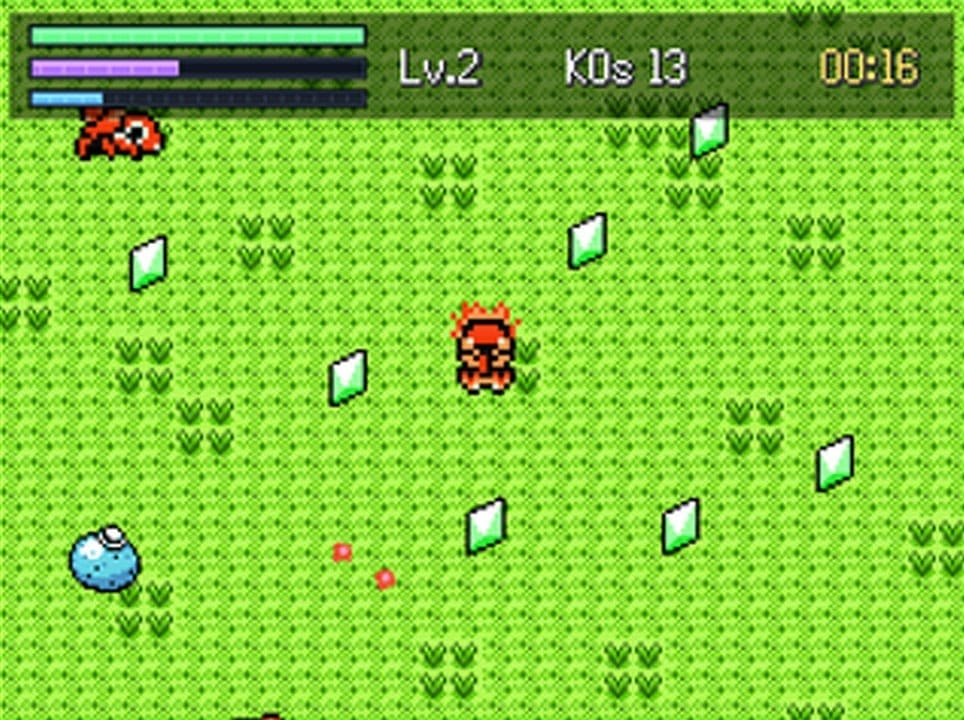
The word Burst in Pokémon Survivor Burst is not flavor. Officially, Burst Attacks are powerful ultimate attacks unique to the Burst system. They sit beside passive skills, multiple attacks, evolutions, and build synergies as the five published ways a Pokémon develops in a run. This page teaches that system. It does not invent a per-species move list the developer has not published in a stable public table.
If you want a ranked “who is strong,” use the tier list and best builds. If you want to know why a run felt empty even when you lived, stay here: you probably stacked passives that never spoke to your Burst, or you fired Burst into a wall of projectiles you could have walked around.
What Burst is for
Basic attacks auto-fire while you move. That loop clears trash. Burst is the button (or charged trigger) you save for a shape problem: a boss, a dense ring, a lane you cannot kite. Think of it as the run’s named ultimate, not a fifth auto. If you dump Burst the moment it lights up, you will be empty when the actual spike arrives.
Version 2.0 reworked Burst mechanics for certain Pokémon and rebalanced damage on several abilities. Version 4.5 completely reworked Pokémon active abilities. Those two notes are why a launch-week Burst habit can be wrong on a 4.5 folder. After a patch, play one Classic run where your only experiment is when you fire Burst. If the ultimate now has a different active rider, you will feel it immediately.
Burst still needs positioning. A huge animation that roots you in ice-type enemy fire (3.0 even fixed those enemy ice projectile animations) is a failed ultimate. Walk first, Burst second. The controls guide is short on purpose: arrows are the real Burst tech.
Passives shape the ultimate
Passive skills exist to enhance the Pokémon and shape strategy. They are not all “more damage.” A recovery passive such as Mudkip’s Damp Recovery changes how greedy you can be with Burst timing because you can afford a graze. A speed-facing stat line (Mudkip’s 2.32 Speed with 112 HP) changes whether you need Burst to delete a pack or merely to open a hole so you can leave.
When a level-up offers a passive, ask one question: does this make my Burst more legal? Legal means you can fire it without dying, or it kills the thing that was about to kill you. A passive that fattens a basic attack you already saturate is a luxury. A passive that shortens downtime, adds a safety layer, or feeds the resource Burst actually spends is a plan.
Do not vacuum every shiny name. Version 2.0 added Bonus Reroll and Ban systems. Those exist so you can refuse a passive that fights your Burst. Banning a tempting but off-plan bonus is a synergy play. Rerolling because you are bored is how Rush runs die.
Multiple attacks are the mid-run kit
Official copy: combine different abilities throughout your run. You will not finish a long Classic with only the two lines on the select screen. Extra attacks drop into the kit as the run goes. The skill is overlap, not collection.
Overlap means coverage. If everything you stacked is the same range and the same delay, Burst has to do all the emergency work. If you mix a close option, a lane option, and a Burst that handles the screen, you can spend Burst on bosses instead of on the first crowded corner. Details on the Choose Pokémon screen (Scroll / Details / Leaderboard / Save) tell you the starting pair—Mudkip’s listed Water Pulse plus Damp Recovery is a starting thesis, not a finished build.
Version 2.0 also added new projectile mechanics and new attack animations. 4.5 reworked collectible item icons, which makes it easier to read pickups at speed. Use that. If you cannot tell what you just absorbed, you cannot tell whether it synergized with Burst.
Form systems for certain Pokémon (2.0) and regional forms (4.5) can change the kit mid-run. A Pikachu line that can become Alolan Raichu under specific requirements is not the same Burst plan as the pre-evolution screenshot. Learn the evolution branches before you lock a Rush build that assumed the wrong form.
Synergy without a fake movelist
Build synergies are “combine attacks, passives and other effects to create increasingly complex builds.” The wiki-safe way to do that without fabricating numbers:
- Read Details before the run. Name the Burst in your own words (screen wipe, pierce lane, point-blank detonation—whatever the animation actually is).
- During level-ups, pick the effect that makes that sentence truer, or that keeps you alive until the sentence matters.
- Ban the effect that makes the sentence false (a melee magnet on a kiting Burst, a greedy damage node when you are one hit from death).
- After the run, look at the leaderboard for that Pokémon and mode. If every high score took longer to Burst, you are firing too early. If they died earlier than you but scored higher, your kit never scaled.
Temporary bonuses (3.0, more in 4.0) and Tower-exclusive temporary bonuses are mode-locked synergy. A Tower-only gift is not part of your Classic thesis. Endless has an exclusive shop and exclusive currency in 4.5; those purchases can reshape a long Burst plan without touching Kecleon. Do not mix the wallets.
Kecleon permanent upgrades sit under the run. They make every Burst slightly more reliable once the Shop Core tree is grown. They will not choose your synergy for you. Spend fragments on the constraint you actually hit—survivability if Burst gets you killed, economy if you never see the level-ups that feed Burst. Shop details: evolutions and Kecleon.
Mode-specific Burst planning
Classic is for learning the charge rhythm and for challenges that need you alive, not stylish. Fire Burst on the first boss-like spike you cannot kite. Then, on the next run, delay one extra wave. That is training, not a leaderboard strategy.
Rush is a 15-minute exam after MissingNo. was removed. You get fewer chances to “find” synergy. Enter Rush with a predetermined Ban rule. If the first three offers do not support Burst, you already know what you will refuse. Rush is also the gate to Tower for that Pokémon—do not burn the clear on a joke kit.
Tower pays an extra Fragment and offers exclusive bonuses. Burst here is a climb tool. If a Tower bonus makes Burst safer, it is probably worth more than a vanity projectile. 4.0 reworked Tower difficulty; greedy ultimates that worked on 3.0 may now eat a hit you cannot afford.
Endless is where a synergy can go weird on purpose. Use the exclusive shop to double down on the sentence you wrote in step 1. If Endless currency is buying something that does not mention your Burst or your survival, you are decorating a run that will still die to the same spike.
A post-run Burst review
After each serious attempt, answer four lines in a note or in your head:
- How many times did I fire Burst, and which of those actually changed the screen?
- Which passive or extra attack made the successful Bursts possible?
- Which pickup did nothing except look loud?
- Did I die during a Burst animation, or while waiting for Burst because the kit had no overlap?
If you died during the animation, practice walking first (and drop resource usage in Options if the frame rate lied to you). If you died waiting, your multiple-attack mix is too thin and Burst is covering for a missing lane. If nothing changed the screen, you are firing at the wrong density—wait for the clump.
Compare one clip of your Burst with a top Classic or Rush row for the same species. You are not copying their unpublished talent tree. You are copying timing. Timing is the part of Burst that does not require a fabricated movelist.
When 4.5’s active-ability rework still feels opaque, take the same Pokémon through a short Classic, a Rush, and—if unlocked—one Tower floor with the same Ban rule. The mode that fails first is the mode whose synergy you have not actually built. Then read game modes for what that mode pays, and only then open Kecleon.
Frequently Asked Questions
Quick answers to the most common questions.
What is Burst in this game?
Burst Attacks are the unique ultimate attacks in the Burst system. Basic attacks still auto-fire while you move. Pair Burst with passives and extra attacks as described above, then compare kits on the tier list.
Where do I read a Pokémon’s starting kit?
On the Choose Pokémon screen, use Details. The controls guide lists that prompt. Do not assume a main-series movepool.
Did Burst change in later patches?
Yes. Version 2.0 reworked Burst for certain Pokémon. Version 4.5 reworked active abilities completely. Check patch notes before you copy an old clip.
Should I spend Burst as soon as it is ready?
Usually no. Save it for a shape problem you cannot kite. Classic is the place to practice delay; Rush punishes empty ultimates. Mode context is in the game modes guide.
Do Kecleon upgrades change Burst?
Permanent Shop Core upgrades can make every run sturdier, but they are not a per-move Burst tree. Spend fragments as covered in evolutions and Kecleon.
How do I practice synergy on a new unlock?
Clear Classic first so you learn the animation, then take that same Pokémon into Rush. Roster unlocks are separate—see unlock Pokémon.